Out of Africa and the Significance of the South Asian Archaeological Record,
By Prof. Michael D. Petraglia Professor of Human Evolution and Prehistory, University of Oxford.
on 24 May 2012 17:00
More Information
Showing posts with label Dispersals. Show all posts
Showing posts with label Dispersals. Show all posts
Friday, 18 May 2012


Wednesday, 2 May 2012
NATURE | NEWS FEATURE Human migrations: Eastern odyssey
Humans had spread across Asia by 50,000 years ago. Everything else about our original exodus from Africa is up for debate.
For the full story in Nature, click here
 |
| Excavation at Jwalapuram Locality 22, Jurreru Valley, India. Middle Palaeolithic artefacts were found under the Toba ash. |
Saturday, 11 June 2011
Dispersals across Arabia
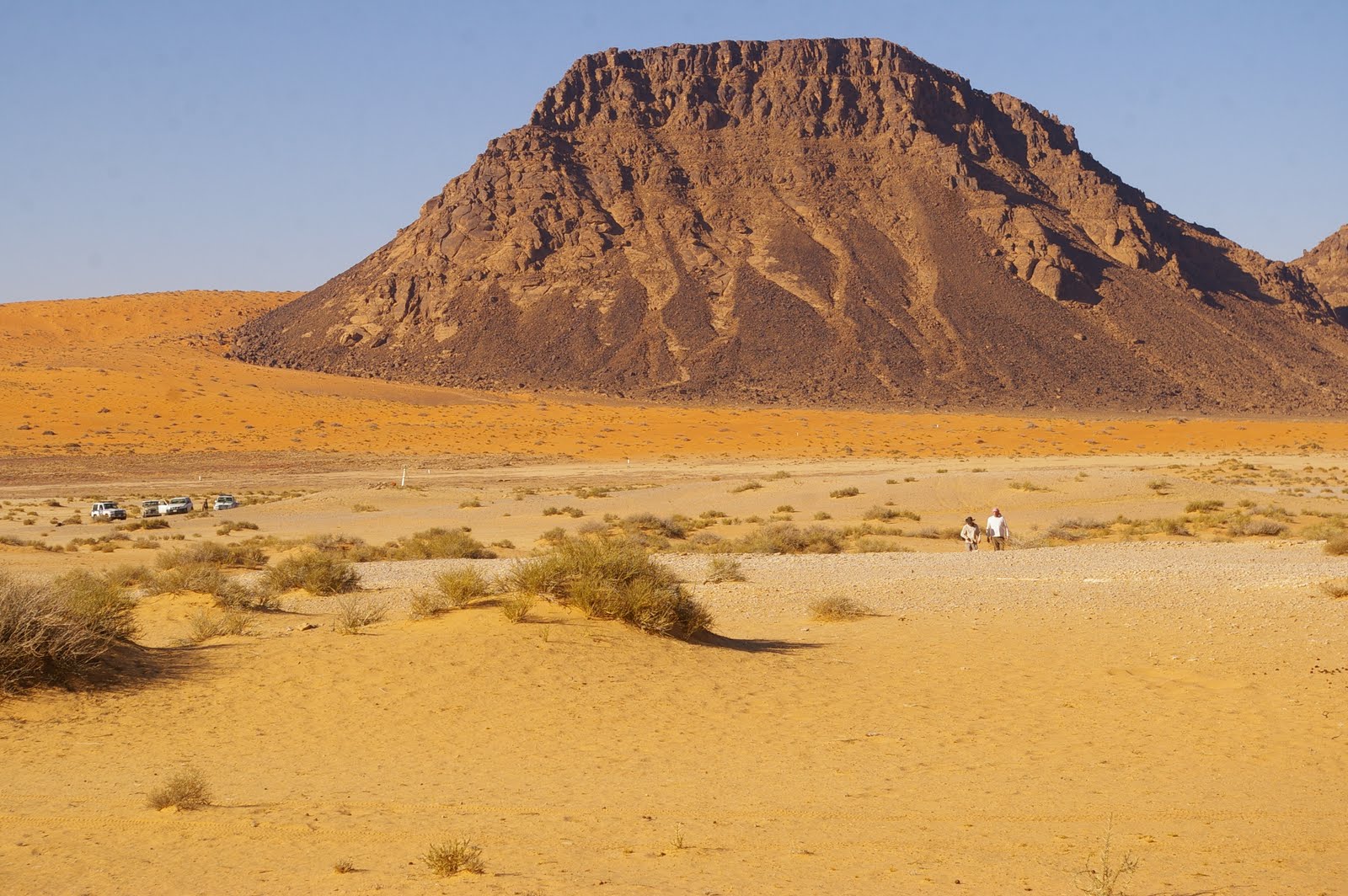 Our team identified a Middle Palaeolithic archaeological site deep inside the Arabian peninsula (click here). The archaeological site, called Jebel Qattar, is located along the Jubbah palaeo-lakeshores. Here, we have an archaeological site dating to 75,000 years ago, corresponding with a wet phase in the Arabian Desert. This new archaeological information fits nicely with a model of human migrations in the interior of Arabia, utilizing lakes and rivers during humid periods. See: Trailblazers across Arabia.
Wednesday, 23 March 2011
Revolutionizing the Age of the Indian Acheulean
The oldest Acheulean artefacts outside of Africa have now been dated to 1.5 million years ago by Shanti Pappu and her team of French and Indian colleagues, as reported in Science. This is rather spectacular and welcome news for our understanding of Out of Africa dispersals. If true, the new evidence from the site of Attirampakkam means that early human populations from Africa were able to reach the subcontinent not long after handaxe and cleaver technology was invented in Africa. These early hominins would have had to pass through some formidable landscapes to reach southern India, skirting around significant geographic barriers such as mountainous terrain and sizeable river valleys. If the dating is upheld, the implication is that ancestors, such as Homo erectus, reached India at an early stage.
Almost at the same time of this publication, our team has just published an on-line article in Quaternary Research which indicates that the Indian Late Acheulean is as young as 140,000 - 120,000 years old. The Son Valley sites of northern India are now among the youngest known Acheulean sites in the world. Based on the Narmada fossil, we opine that these Late Acheulean industries were probably made by an archaic, but somewhat bigger brained ancestor, such as Homo heidelbergensis.
Current research in India therefore indicates that the Acheulean industry ranges from 1.5 million years ago to 120,000 years -- a period spanning well over 1.4 million years of hominin evolution! Systematic excavations and rigourous dating methods have finally allowed us to better understand the population history of the subcontinent. Though direct fossil associations with tools remain elusive, the current evidence does suggest that more than one ancestor made the handaxe and cleaver industries. Does this mean that there was more than one dispersal into the subcontinent, or does it mean that there was a regional speciation event? Though the Acheulean toolkits obviously served useful purposes for a period extending more than a million years, the long-term stylistic consistency of the tool industry is rather remarkable, indicating that the pace of technological innovations was unlike anything that we see in the modern world.
Almost at the same time of this publication, our team has just published an
 on-line article in Quaternary Research which indicates that the Indian Late Acheulean is as young as 140,000 - 120,000 years old. The Son Valley sites of northern India are now among the youngest known Acheulean sites in the world. Based on the Narmada fossil, we opine that these Late Acheulean industries were probably made by an archaic, but somewhat bigger brained ancestor, such as Homo heidelbergensis.
Current research in India therefore indicates that the Acheulean industry ranges from 1.5 million years ago to 120,000 years -- a period spanning well over 1.4 million years of hominin evolution! Systematic excavations and rigourous dating methods have finally allowed us to better understand the population history of the subcontinent. Though direct fossil associations with tools remain elusive, the current evidence does suggest that more than one ancestor made the handaxe and cleaver industries. Does this mean that there was more than one dispersal into the subcontinent, or does it mean that there was a regional speciation event? Though the Acheulean toolkits obviously served useful purposes for a period extending more than a million years, the long-term stylistic consistency of the tool industry is rather remarkable, indicating that the pace of technological innovations was unlike anything that we see in the modern world.
Monday, 31 January 2011
Humans 'left Africa much earlier'
Modern humans may have emerged from Africa up to 50,000 years earlier than previously thought, a study suggests. Researchers have uncovered stone tools in the Arabian peninsula that they say were made by modern humans about 125,000 years ago. The tools were unearthed at the site of Jebel Faya in the United Arab Emirates, a team reports in the journal Science. Read more.
Thursday, 25 November 2010
Palaeoanthropology: Early Homo sapiens in China
The timing of the dispersal of our species from Africa is a continuing and lively topic of debate. Evidence that modern humans existed in China more than 100,000 years ago is both equivocal and thought-provoking. Read More.
Saturday, 25 September 2010
Stone tools 'change migration story'

A research team reports new findings of stone age tools that suggest humans came "out of Africa" by land earlier than has been thought.
Click here for the BBC story.
Friday, 21 May 2010
Archaeological Fieldwork Kicks Off in Arabian Peninsula

The Arabian peninsula is in a critical geographical position for understanding human movements out of Africa, as exemplified in a number of papers in a book co-edited by Petraglia and Rose, “The Evolution of Human Populations in Arabia” (Springer, 2009). While some inroads have been made to understand the dispersal of modern humans and our archaic ancestors, relatively little interdisciplinary and long-term fieldwork has been conducted to tackle this problem. Our team aims to change this situation -- thanks to a new 5 year agreement with the Saudi Commission for Tourism & Antiquities and in partnership with Dr. Abdullah Alsharekh of
In March of this year a small team of interdisciplinary specialists conducted a pilot study in the palaeolake region of the
The joint fieldwork programme is part of a 5 year agreement between the Saudi Commission for Tourism & Antiquities and the
Saturday, 15 May 2010
Out of Africa
Our team has recently written the article, "Out of Africa: new hypotheses and evidence for the dispersal of Homo sapiens along the Indian Ocean rim", published by the Annals of Human Biology. We argue that modern humans were present in Arabia and South Asia earlier than currently believed, and probably coincident with the presence of Homo sapiens in the Levant between ca 130 and 70,000 years ago. We go on to argue that climatic and environmental fluctuations during the last 125,000 years would have had significant demographic effects on Arabian and South Asian populations, though indigenous populations would have responded in different ways. Based on a review of the current genetic, archaeological and environmental data, we indicate that demographic patterns in Arabia and South Asia suggest an early dispersal. This new hypothesis, based on new evidence, contrasts with the consensus view of Indian Ocean movements, which contends that modern humans moved out of Africa 60,000 years ago, rapidly moving along the coast to eventually reach Australasia. This new model has obvious implications about the unfolding of the later demographic history of human populations in Eurasia.
Subscribe to:
Posts (Atom)


