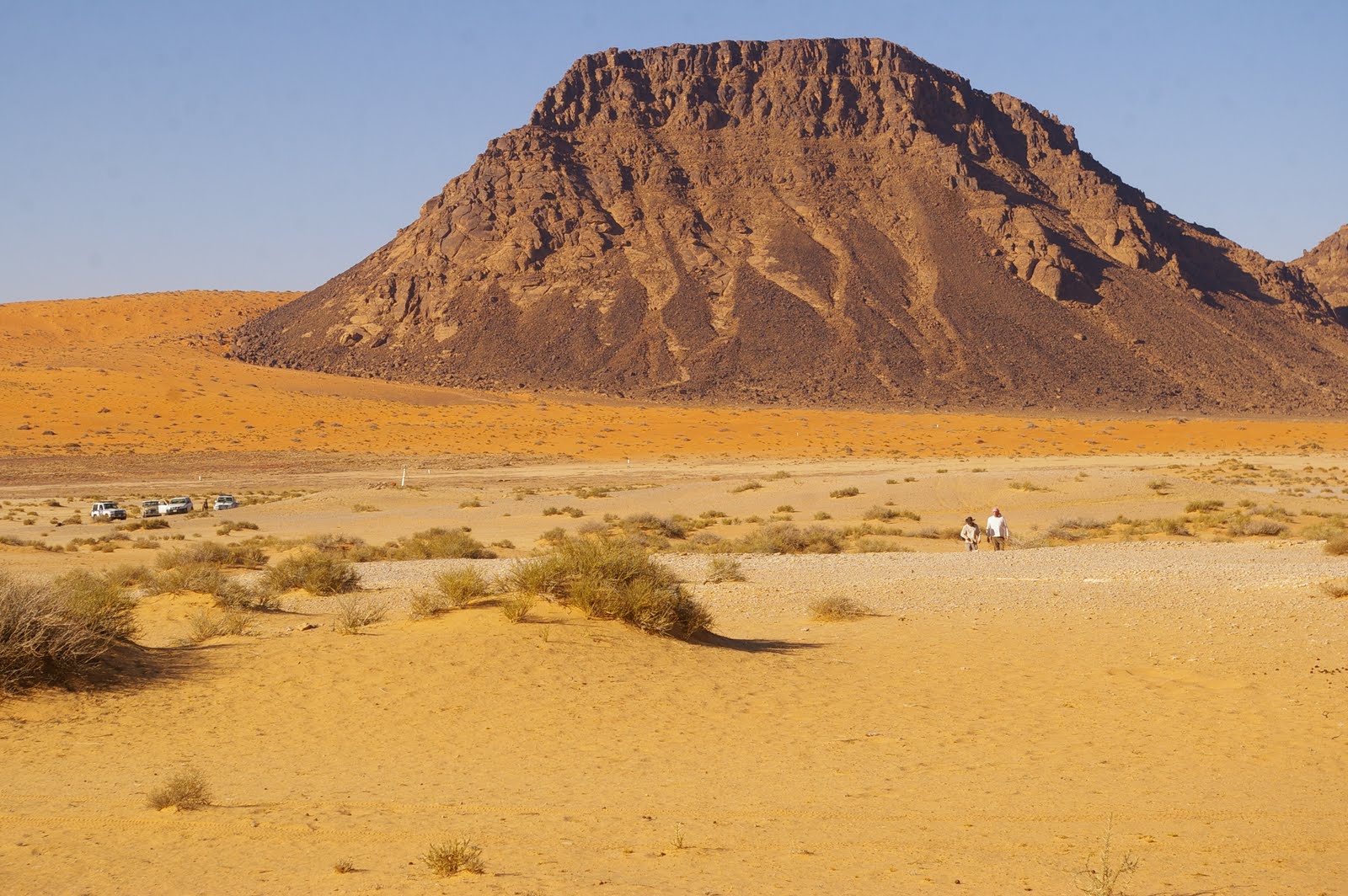
Oxford University is to launch a new centre to study the archaeological and cultural heritage of Asia.
 On 21 October, the Oxford Centre for Asian Archaeology, Art and Culture, based in the University’s School of Archaeology, will officially open to become the only Asia-specialist centre of archaeological research and teaching in Europe.
Although Asia has some of the world’s richest archaeological and artistic forms of heritage, surprisingly little is known or taught about this period in Britain.
Research and teaching will encompass all areas of Asia and cover the Palaeolithic (Old Stone Age) through to the historical period.
Asia celebrates a huge diversity of cultures but less research has been conducted into how the different cultures are related. The new Centre will look at how the cultural influences, both within the region and in the wider world beyond, might be connected. The research will not only draw on archaeology but also other disciplines, such as anthropology, art history, linguistics, molecular genetics, the earth sciences and geography.
As from October 2011 the Centre will offer a new Asia-specific Master’s degree stream and new courses in the Archaeology of Asia, Chinese Archaeology and in the Palaeolithic of Asia.
Centre Co-director Professor Chris Gosden said: ‘Asian archaeology and heritage studies are enormously important for understanding how the modern world was shaped, and there is a growing need for world-class expertise in this area. The Oxford Centre for Asian Archaeology, Art and Culture has been developed to support research and training in various areas of Asian archaeology and heritage studies, and to offer opportunities for scholarly discussion, networking and collaboration.’
One of the Centre’s main aims is to increase the School’s academic links with Asian institutions in order to support major research programmes and encourage further research collaborations and student exchanges.
The Centre will also seek to work with scholars specialising in this field at institutions elsewhere around the world. Researchers at the School of Archaeology already have field projects in China, India, Japan, Malaysia, Saudi Arabia, Russia, Sri Lanka, Taiwan, Thailand, Turkey and Vietnam.
To mark the Centre’s launch on 21 October, Dame Jessica Rawson will give a public lecture entitled ‘From Steppe Road to Silk Road: Inner Asia’s Interaction with and impact on China, 2000 BC – AD 1000’. Professor Rawson, Professor of Chinese Art and Archaeology, is to be affiliated to the School of Archaeology and the Centre, increasing its capacity in Chinese art and archaeology. Professor Rawson’s research covers a wide range, and her current project focuses on the Zhou dynasty (1045-221 BC) and China’s early interaction with Inner Asia. She has served as Keeper of the Department of Oriental Antiquities at the British Museum and Warden of Merton College. Professor Rawson is a Fellow of the British Academy and was made a Dame of the British Empire for services to oriental studies in 2002.
The three Co-Directors of the Centre are Professor Chris Gosden, Professor Mark Pollard and Dr Michael Petraglia. Dr Michael Petraglia was recently appointed to the School of Archaeology, in part because of his active field projects in India. These include an international study of the impact of the colossal Toba volcanic eruption (in what is now Indonesia) 74,000 years ago. His most recent research findings of Stone Age tools, suggest that humans migrated out of Africa 70,000 – 80,000 years ago, earlier than previously thought.
Also instrumental in the launch of the new Centre is Dr Nicole Boivin. Dr Boivin has conducted research in South Asia for 15 years and is the Director of the the SEALINKS Project, a new international project funded through a prestigious €1.2 million Starting Grant from the European Research Council. The Sealinks project is exploring the origins and development of early seafaring activity and long-distance trade in the Indian Ocean, including some of the earliest evidence for globalisation.
The new Centre has been supported by a gift from an anonymous donor to enable the creation of a new post of Assistant Director. The financial support will also pay for a research seminar series, conferences and workshops, and researcher and student exchanges.
To visit the Oxford Centre for Asian Archaeology, Art and Culture website click here.


 This conference provides a forum for a rare interdisciplinary discussion between archaeologists, historians, ethnographers and geographers about the materials, problems and opportunities for interdisciplinary work on the Indian Ocean World (IOW) from the 9TH—19TH centuries. Stretching from the coast of East Africa to the China Seas, the IOW had by the 13th century developed what economic historians have called the world's 'First Global Economy', shaped by the distinct winds of the monsoons- a sophisticated durable system of long distance exchange of commodities, ideas, technology and people. Calling upon Archeology, History, Geography, and Ethnography, this conference will explore aspects of the growth and importance of the IOW trade between the 9th-19th centuries, as well as the interactions between the environment, commerce, and people. There is a compelling need to understand how people and communities in the IOW past responded to climatic and other environmental changes in a geopolitical area with a wide variety of trade and cultural relationships that included a broad arc stretching from the East African coast, through the Gulf States and South Asia, to East and Southeast Asia.