Welcome!

This blog provides a forum for presenting and discussing the latest findings relating to the ancient Indian Ocean, from archaeology, molecular genetics, historical linguistics and other disciplines. It takes a long-term view of the Indian Ocean region, exploring the processes that shaped its cultures, societies and environments from the Pleistocene to the historical period.

We welcome your ideas, inputs and views. Please provide news of relevent publications, conferences, meetings, and other events.

Thursday, 21 February 2013

Crop translocation modes and motivations

A few months ago, some of the SEALINK project members, put out a paper in World Archaeology, "Old World Globalization and the Colombian Exchange: comparions and contrast." While this paper is ostensibly a critique of the paper a year early by our colleagues in Cambridge (Jones & al Food Globalization in Prehistory), that is really only a starting point for a conversation of how and why crop spread at apparently quite early dates. While Jones et al propose that one mechanism was a desire for calories, i.e. a need to produce more staple foods, with a preference for easy to grow crops, we have taken issue with this suggesting instead that in many cases, perhaps in most cases, initial translocation of crops was small scale, experimental, and unlikely to have been of much subsistence importance. There are a few evidential problems we have catalogued, like dubiously early (Neolithic) dates for millet or buckwheat in Europe that  really are not supported by recent systematic archaeobotanical work in Europe. This paper also includes an updating mapping of the eastward spread of wheat and its associates (barley, but also lentil, pea, etc.) into China and India. This aspect of the paper I have noted on the archaeobotanist blog, in relation to the eastern extensive of crop spread from the Near East. However, it is the contrasts between India and China, which I think are most interesting. The Near Eastern crops as a group were much more important in India, although gradually and with distance this became less the case, while in the China it is only wheat at arrives early and it really appear unimportant. Indeed historical sources point to its importance arising in much later periods. While both region get wheat at around the same time (later 3rd millennium BC), the patterns of uptake are very different, implying differing social motivations. This leads to what I consider the most important part of the paper, the start of a discussion of how we should classify crops, in terms of value, both social and economic, and how crops change in value with time and context. Thus one culture staple crop is another culture exotica or cash crop, and where a crop fall in this schema, whether available in bulk or rare, locally or imported, changes over time. We would like to see this as the start of a new way thinking about how foodstuffs and crops fit into the borader patterns of social interaction both locally and long-distance.

Monday, 28 May 2012

Antiquity's Ben Cullen Prize Winners, 2011


Congratulations to Dorian Fuller, Nicky Boivin, Tom Hoogervorst and Robin Allaby who have won this year's Ben Cullen Prize, awarded to the runner up for best contribution to the journal, Antiquity.
Every year Antiquity awards prizes for the best article they have published.  The Ben Cullen prize was set up in memory a bright young scholar at Cambridge, who died all too young.  Here is the title and abstract.  Click below to see the article. 


Across the Indian Ocean: the prehistoric movement of plants and animals
Dorian Q Fuller, Nicole Boivin, Tom Hoogervorst, Robin Allaby

Schematic map of major Bronze Age translocations 
Here is a major research project that is peopling the Indian Ocean with prehistoric seafarers exchanging native crops and stock between Africa and India. Not the least exciting part of the work is the authors’ contention that the prime movers of this maritime adventure were not the great empires but a multitude of small-scale entrepreneurs.

For the article, click here


Friday, 18 May 2012

Royal Asiatic Society of Sri Lanka Lecture

Out of Africa and the Significance of the South Asian Archaeological Record,
By Prof. Michael D. Petraglia Professor of Human Evolution and Prehistory, University of Oxford.
on 24 May 2012 17:00

More Information

Wednesday, 2 May 2012

NATURE | NEWS FEATURE Human migrations: Eastern odyssey

Humans had spread across Asia by 50,000 years ago. Everything else about our original exodus from Africa is up for debate.

Excavation at Jwalapuram Locality 22, Jurreru Valley, India.  Middle Palaeolithic artefacts were found under the Toba ash.
For the full story in Nature, click here

Tuesday, 1 May 2012

Ancient network of rivers and lakes found in Arabian Desert

Satellite images have revealed that a network of ancient rivers once coursed their way through the sand of the Arabian Desert, leading scientists to believe that the region experienced wetter periods in the past.  See:  Click here for more information

Friday, 24 February 2012

Sealinks project in BBC News

BBC News has a story on the 5th anniversary of European Research Council funding, which includes mention of the Sealinks project (not by name) and quotations from Sealinks leader, Nicole Boivin.

Tuesday, 14 February 2012

Monsoon aridification over Holocene South India & agricultural adaptation


[from the archaeobotanist] A new article, out this week in Geophysical Research Letters,"Holocene aridification of India"by, Ponton, Giosan, an others, presents important new, and quite high resolution, data on past monsoon dynamics and vegetation of peninsular India spanning the whole Holocene. This research, lead by researchers from the Woods Hole Oceanographic Institute, analyzed evidence from a Bay of Bengal sediment core, which captures discharges from the large Godavari river system. The core data comes from carbon isotopes of leaf waxes, reflecting the amount of arid-adapted/ savannah vegetation in the Godavari catchment, and oxygen isotopes from a marine microfossil that record salinity. This points to a general aridification trend over the course of the middle and late Holocene, supporting what we already would infer from pollen data in Rajasthan or monsoon proxies in the Arabian Sea, but this time providing more direct evidence from South India. My own involvement in this work came in the form of trying to think about how this might be correlated with archaeological evidence for settlement, agriculture and population in South India-- where the archaeological record suggests increasing sedentism, population and agriculture in response to, or despite, aridification, a contrast from the Indus region for example where the long-term trend of population depletion as aridification proceeded. This suggests long term cultural adapatation processes to aridification in peninsular Indian agricultural practices.


To quote from part of our conclusion: "The significant aridification recorded after ca. 4,000 years ago may have spurred the widespread adoption of sedentary agriculture in central and south India capable of providing surplus food in a less secure hydroclimate. Archaeological site numbers and the summed probability distributions of calibrated radiocarbon dates from archaeological sites, which serve as proxies of agricultural population, increase markedly after 4,000 BP in peninsular India [discussed in detail in the electronic supplementary text]...In contrast, the same process of drying elicited the opposite response in the already arid northwestern region of the subcontinent along the Indus River. From 3,900 to 3,200 years BP, the urban Harappan civilization entered a phase of protracted collapse. Late Harrapan rural settlements became instead more numerous in the rainier regions at the foothills of the Himalaya and in the Ganges watershed."  Most of the archaeological information is summarized in the electronic supplement, Section 4., and included an attempt to sum Neolithic/Chalcolithihc radiocarbon dates (as limited as they are) and to tally known site numbers through the Iron Age. 

This work complements recent sedimentary studies of the Indus river system, such as the Clift et al Geology paper, blogged earlier.

Saturday, 11 February 2012

A widening range of textiles on Harappan trading ships

The archaeobotanist blog summarizes some recent reports on textile and fibres identifictions from Harappan contexts, including hard evidence for jute (published by Wright et al). Taken together with jute and sunn hemp finds from eastern Iran, recent evidence for Harappan silk (made from the native Assam silk moth), and older evidence for flax and cotton, we can regard the Harappan civilization as the most diversified textile producers of the Bronze Age world. They also made nets made out wild palm fibres.

Monday, 6 February 2012

Sourcing the 'lost Saraswati' river: new geological evidence

[from thearchaeobotanist]
Recently published on-line in Geology  is a paper which might not appear on the surface to be very archaeobotanical, but which is important for thinking about the past agriculture of the Indus valley. This is by Clift et al (2012) on "U-Pb zircon dating evidnece for a Pleistocene Sarasvati River and capture of the Yamuna River". This paper provides sources for the headwater sediments in the various rivers of the Indus system based on zircon finger-printed (geological source dating in the 1000s of millions of years). These dated source profiles in turn are stratified in the Pleistocene and Holocene river sequences which have been dated by OSL. These river systems include the now extinct Ghaggar-Hakra river, often equated with the 'lost Saraswati" of Indian epic. The paper shows that while the Ghaggar-Hakra used to be much larger in the Pleistocene, drawing on the headwaters that now feed the  Yamuna, tha Yamuna had begun to flow  east into the Ganges before the End of the Pleistocene, and therefore well before the start of Harappan urban societies. Throughout the Holocene, including the Harappan period this river was fed only by seasonal monsoon rain in the east. This rain-fed Ghaggar-Hakra was  active until after 4.5 ka and was then covered by dunes before 1.4 ka. What this means is that the Ghaggar-Hakra, unlike any of the major Indus tributaries, was not fed by snow melt, which begins in Spring and may be unpredictable, but was entirely reliant on swelling its banks from the summer monsoon. This means it would have been an ideal river for winter crop agriculture, along the lines of the Nile flood regime which is keyed to the Blue Nile's monsoon source, with sowing of wheat and barley in Oct.-Nov. as the monsoon flood began to recede to leave behind a rich floodplain. These could then be left to mature until harvests in March or April, without fear of early snowmelt floods ruining crops. It really should come as no surprise then that so many Harappan Bronze Age sites concentrated in this valley. Nevertheless as monsoons gradually weakened (already underway during the Harappan period) with the flood water source retreating eastwards, and the Thar desert expanding, the valley became gradually drier and eventually choked with desert sands. This, however happened in Iron Age or post-Iorn Age times, so thus there is no basis for correlating any catastrophic shift in the Ghaggar-Hakra with the end of the Harappan civilization-- a notion which has often appealed to archaeologists.
[edited for typos 9.2.2102 DF]

Sunday, 5 February 2012

Lithic continuity & innovation in Holocene South India

A new publication from the fieldwork of South Deccan Prehistory project, is a report on the struck lithics from the Sanganakallu-Kupgal area sites: Ceri Shipton, M. Petraglia et al. (2012) Lithic technology and social transformations in the South Indian Neolithic: the evidence from Sanganakallu-Kupgal. Journal of Anthropological Archaeology. In it we report the results of ~800,000 lithics artefacts from 4 sites, and while obviously not all of those were diagnostic many 10,000s were quantified and measured from each site and major period. While the study as a whole spans the Holocene from 9000 BP to the 1st Millennium BC, the vast majority fall in the core period of the developed Southern Neolithic, or Ashmound tradition, mainly from 2000-1300 BC. Two rather different traditions of microlith manufacture are defined, one of which is "Mesolithic" and the other "Neolithic" although there are reasons to see a relationship between such as that the Neolithic represented innovation on the other, although the carrying some of this innovation by an immigrant Neolithic, which brought pastoralism but probably not cultivation may also play a role. Also of interest, however, is the apparent re-emergence of Mesolithic lithic after 1300 BC, when the Neolithic settlements were abandoned or in decline. This seems to imply that some hunter-gatherers population persisted in the region with their Mesolithic traditions but came to re-occupy sites, represented by the rock shelter of Birappa, after the transformations of the late Neolithic.  These data help to contextualize the Neolithization of South India, a region which saw some local crop domestications, as well as the Late Neolithic decline or transformation.

Thursday, 19 January 2012

Debating early African bananas

[This post is copied from the archaeobotanist blogNeumann et al. in a new Quaternary International article "First farmers in the Central African rainforest: A view from southern Cameroon", report a combination of archaeobotanical, apynological and historical linguistic evidence for the nature of early Bantu economies on the northwestern rainforest along margins of central Africa in the First Millennium BC. This includes updated and important discussions of pearl millet, tree nut use (like Canarium and oil palm). These societies brought savanna millet agriculture with them and took advantage of drier conditions to cultivate millet in marginal forest environments, while utilizing (and managing?) forest tree resources as well. Of relevance to those who have argued that bananas were fundamental to early Bantu economies in the rainforest zone (e.g. Blench 2009), however, is the lack of evidence for bananas in these newer excavations. The article includes a short paragraph on bananas, with some quite  critical comments on the issue of early African banans ("act two" in thehistory summarized below on the archaeo botanist blog). They note that study in their samples "several thousand phytoliths already counted, no evidence for Musa could be detected. This sheds further doubt on the banana phytoliths from the contemporary third millennium BP site Nkang" and also they argue that, "There are also ecological arguments against cultivation of banana during this period. As is shown in the following, the climate was much more seasonal in the second half of the third millennium BP and thus unfavourable for plantains which require a humid climate without any major oscillations".

So the debate is out in the open. I don't think there is question of whether the reported phytoliths of Nkang are from Musa, but the worry is surely whether these phytoliths are actually of Iron Age date. They are not directly dated, and the possibility of intrusive or contaminating material from later, when bananas are such a prominent part of the present landscape, contamination is what we need to worry about. On the other hand Nkang is not in exactly the same area as the site studied by Neumann et al, so supporters of the early banana hypothesis might point to diverse and varied economies in the Iron Age. All the more reason to chase more archaeobotanical sampling in the region: we are still reliant on a just a few sites.

Nkang is at present the main data point in African archaeology that supports the notion of a prehistoric, first millennium BC diffusion of tropical crops from Asia to Africa ('the trio'= bananas, taro, and Asian yam), as summarized  in the sealinks Antiquity article last year.

Thursday, 8 December 2011

Sealinks at Buckingham Palace Reception


Dr Nicole Boivin, Senior Research Fellow in Archaeology at Jesus College, has attended a reception given by the Queen and the Duke of Edinburgh in honour of those involved in "Exploration and Adventure".

Read More here
Read More here

Monday, 17 October 2011

The Dimensions of the Indian Ocean World Past (Conference)

Conference announcement (h/t Paul Lane):

THE DIMENSIONS OF THE INDIAN OCEAN WORLD PAST: SOURCES AND OPPORTUNITIES FOR INTERDISCIPLINARY WORK IN INDIAN OCEAN WORLD HISTORY, 9TH -19TH CENTURIES
The Western Australian Maritime Museum, Victoria Quay, Fremantle, 12-14 November 2012

Overview
This conference provides a forum for a rare interdisciplinary discussion between archaeologists, historians, ethnographers and geographers about the materials, problems and opportunities for interdisciplinary work on the Indian Ocean World (IOW) from the 9TH—19TH centuries. Stretching from the coast of East Africa to the China Seas, the IOW had by the 13th century developed what economic historians have called the world's 'First Global Economy', shaped by the distinct winds of the monsoons- a sophisticated durable system of long distance exchange of commodities, ideas, technology and people. Calling upon Archeology, History, Geography, and Ethnography, this conference will explore aspects of the growth and importance of the IOW trade between the 9th-19th centuries, as well as the interactions between the environment, commerce, and people. There is a compelling need to understand how people and communities in the IOW past responded to climatic and other environmental changes in a geopolitical area with a wide variety of trade and cultural relationships that included a broad arc stretching from the East African coast, through the Gulf States and South Asia, to East and Southeast Asia.
The papers and interdisciplinary discussions will focus upon three main research thrusts: archeological, economic and environmental. Participants will explore the emergence of aspects of the IOW economy from archeological and historical records. Historians, geographers and ethnographers will examine and measure fluctuations and impacts in human-environmental interaction over time. Together, participants will also assess the impacts of certain imperatives of the cultures of consumption of the first global economy as commodities were sold and traded in a variety of social and cultural settings within the IOW.

This ARC/MCRI conference will examine aspects of the socially regulated processes of circulation, human–environment interactions, and responses to environmental change, in the First Global Economy. As a joint Murdoch-McGill initiative, the conference represents a crucial Australian step of the global project 'The Indian Ocean World: the Making of the First Global Economy in the Context of Human-Environment Interaction' led by Professor Gwyn Campbell, McGill University.

http://wwwarc.murdoch.edu.au/research/iow_conf.html

Saturday, 11 June 2011

Dispersals across Arabia

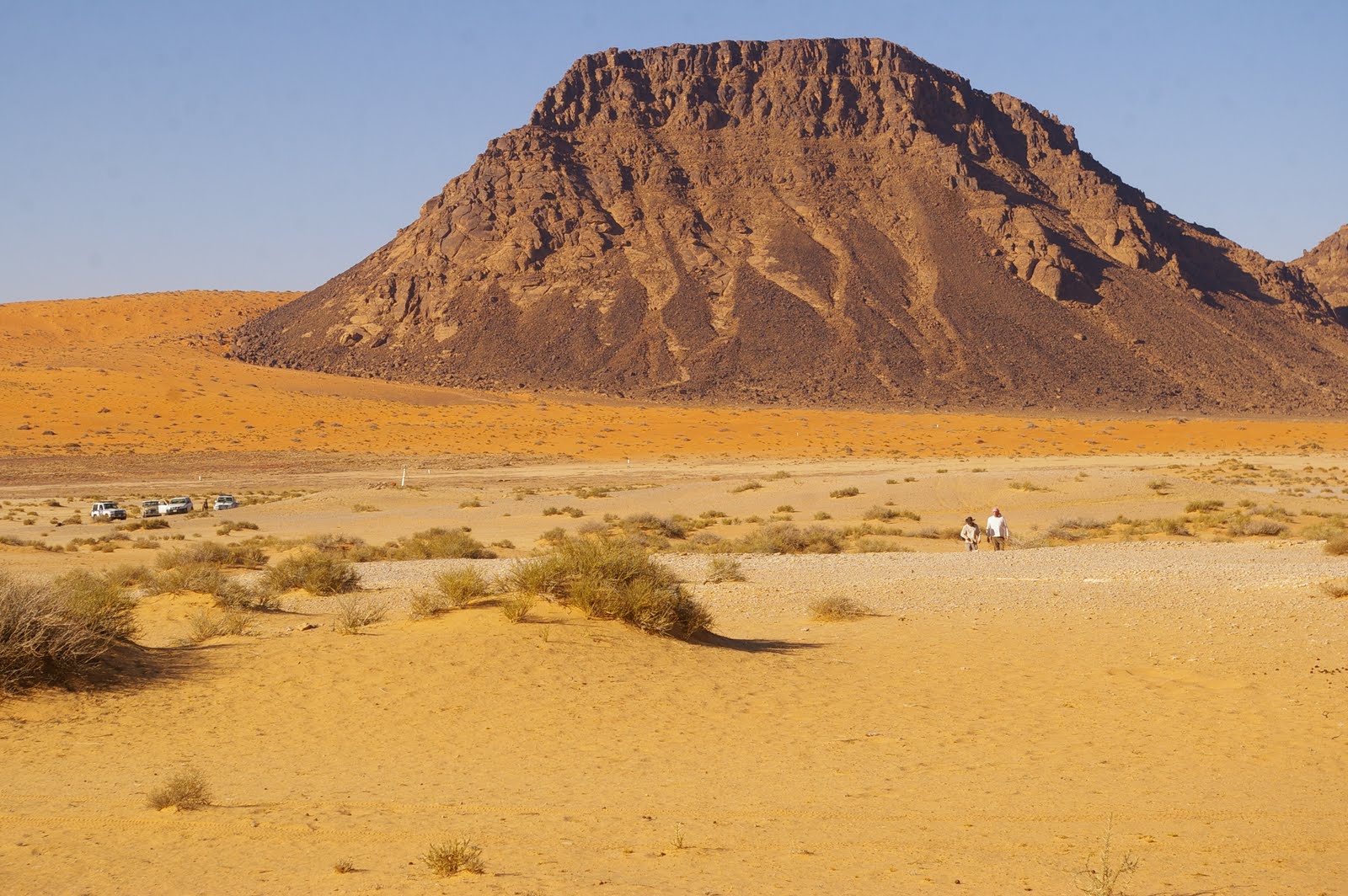
Our team identified a Middle Palaeolithic archaeological site deep inside the Arabian peninsula (click here). The archaeological site, called Jebel Qattar, is located along the Jubbah palaeo-lakeshores. Here, we have an archaeological site dating to 75,000 years ago, corresponding with a wet phase in the Arabian Desert. This new archaeological information fits nicely with a model of human migrations in the interior of Arabia, utilizing lakes and rivers during humid periods. See: Trailblazers across Arabia.

Wednesday, 23 March 2011

Revolutionizing the Age of the Indian Acheulean

The oldest Acheulean artefacts outside of Africa have now been dated to 1.5 million years ago by Shanti Pappu and her team of French and Indian colleagues, as reported in Science. This is rather spectacular and welcome news for our understanding of Out of Africa dispersals. If true, the new evidence from the site of Attirampakkam means that early human populations from Africa were able to reach the subcontinent not long after handaxe and cleaver technology was invented in Africa. These early hominins would have had to pass through some formidable landscapes to reach southern India, skirting around significant geographic barriers such as mountainous terrain and sizeable river valleys. If the dating is upheld, the implication is that ancestors, such as Homo erectus, reached India at an early stage.

Almost at the same time of this publication, our team has just published an on-line article in Quaternary Research which indicates that the Indian Late Acheulean is as young as 140,000 - 120,000 years old. The Son Valley sites of northern India are now among the youngest known Acheulean sites in the world. Based on the Narmada fossil, we opine that these Late Acheulean industries were probably made by an archaic, but somewhat bigger brained ancestor, such as Homo heidelbergensis.

Current research in India therefore indicates that the Acheulean industry ranges from 1.5 million years ago to 120,000 years -- a period spanning well over 1.4 million years of hominin evolution! Systematic excavations and rigourous dating methods have finally allowed us to better understand the population history of the subcontinent. Though direct fossil associations with tools remain elusive, the current evidence does suggest that more than one ancestor made the handaxe and cleaver industries. Does this mean that there was more than one dispersal into the subcontinent, or does it mean that there was a regional speciation event? Though the Acheulean toolkits obviously served useful purposes for a period extending more than a million years, the long-term stylistic consistency of the tool industry is rather remarkable, indicating that the pace of technological innovations was unlike anything that we see in the modern world.

Monday, 31 January 2011

Humans 'left Africa much earlier'

Modern humans may have emerged from Africa up to 50,000 years earlier than previously thought, a study suggests. Researchers have uncovered stone tools in the Arabian peninsula that they say were made by modern humans about 125,000 years ago. The tools were unearthed at the site of Jebel Faya in the United Arab Emirates, a team reports in the journal Science. Read more.

Thursday, 25 November 2010

Palaeoanthropology: Early Homo sapiens in China

The timing of the dispersal of our species from Africa is a continuing and lively topic of debate. Evidence that modern humans existed in China more than 100,000 years ago is both equivocal and thought-provoking. Read More.

Giant Eruption Cut Down to Size

More than 2000 times as massive as the blast that ripped open Mount St. Helens in 1980, the Indonesian "super-volcano" Toba ejected millions of metric tons of volcanic ash, sulfur, and other debris into the atmosphere 74,000 years ago. The eruption darkened the skies, cooled the globe by 10˚C for half a decade, and redirected the course of human evolution. At least that's what some climatologists and archeologists have concluded. But a new model indicates that Toba's climate effects were milder and abated quickly, suggesting that humans may have made it through the incident relatively unscathed. Read More

Wednesday, 20 October 2010

Launch of Oxford Centre for Asian Archaeology, Art and Culture

Oxford University is to launch a new centre to study the archaeological and cultural heritage of Asia.

On 21 October, the Oxford Centre for Asian Archaeology, Art and Culture, based in the University’s School of Archaeology, will officially open to become the only Asia-specialist centre of archaeological research and teaching in Europe.

Although Asia has some of the world’s richest archaeological and artistic forms of heritage, surprisingly little is known or taught about this period in Britain.

Research and teaching will encompass all areas of Asia and cover the Palaeolithic (Old Stone Age) through to the historical period.

Asia celebrates a huge diversity of cultures but less research has been conducted into how the different cultures are related. The new Centre will look at how the cultural influences, both within the region and in the wider world beyond, might be connected. The research will not only draw on archaeology but also other disciplines, such as anthropology, art history, linguistics, molecular genetics, the earth sciences and geography.

As from October 2011 the Centre will offer a new Asia-specific Master’s degree stream and new courses in the Archaeology of Asia, Chinese Archaeology and in the Palaeolithic of Asia.

Centre Co-director Professor Chris Gosden said: ‘Asian archaeology and heritage studies are enormously important for understanding how the modern world was shaped, and there is a growing need for world-class expertise in this area. The Oxford Centre for Asian Archaeology, Art and Culture has been developed to support research and training in various areas of Asian archaeology and heritage studies, and to offer opportunities for scholarly discussion, networking and collaboration.’

One of the Centre’s main aims is to increase the School’s academic links with Asian institutions in order to support major research programmes and encourage further research collaborations and student exchanges.

The Centre will also seek to work with scholars specialising in this field at institutions elsewhere around the world. Researchers at the School of Archaeology already have field projects in China, India, Japan, Malaysia, Saudi Arabia, Russia, Sri Lanka, Taiwan, Thailand, Turkey and Vietnam.

To mark the Centre’s launch on 21 October, Dame Jessica Rawson will give a public lecture entitled ‘From Steppe Road to Silk Road: Inner Asia’s Interaction with and impact on China, 2000 BC – AD 1000’. Professor Rawson, Professor of Chinese Art and Archaeology, is to be affiliated to the School of Archaeology and the Centre, increasing its capacity in Chinese art and archaeology. Professor Rawson’s research covers a wide range, and her current project focuses on the Zhou dynasty (1045-221 BC) and China’s early interaction with Inner Asia. She has served as Keeper of the Department of Oriental Antiquities at the British Museum and Warden of Merton College. Professor Rawson is a Fellow of the British Academy and was made a Dame of the British Empire for services to oriental studies in 2002.

The three Co-Directors of the Centre are Professor Chris Gosden, Professor Mark Pollard and Dr Michael Petraglia. Dr Michael Petraglia was recently appointed to the School of Archaeology, in part because of his active field projects in India. These include an international study of the impact of the colossal Toba volcanic eruption (in what is now Indonesia) 74,000 years ago. His most recent research findings of Stone Age tools, suggest that humans migrated out of Africa 70,000 – 80,000 years ago, earlier than previously thought.

Also instrumental in the launch of the new Centre is Dr Nicole Boivin. Dr Boivin has conducted research in South Asia for 15 years and is the Director of the the SEALINKS Project, a new international project funded through a prestigious €1.2 million Starting Grant from the European Research Council. The Sealinks project is exploring the origins and development of early seafaring activity and long-distance trade in the Indian Ocean, including some of the earliest evidence for globalisation.

The new Centre has been supported by a gift from an anonymous donor to enable the creation of a new post of Assistant Director. The financial support will also pay for a research seminar series, conferences and workshops, and researcher and student exchanges.

To visit the Oxford Centre for Asian Archaeology, Art and Culture website click here.


Saturday, 25 September 2010

Stone tools 'change migration story'


A research team reports new findings of stone age tools that suggest humans came "out of Africa" by land earlier than has been thought.

Click here for the BBC story.